The Mosquito Bucket Challenge 
Join thousands reducing mosquitoes without fogging—in your own yard.
A project by Homegrown National Park
How it works
Mosquitoes lay eggs in standing water. A mosquito bucket attracts them as a place to reproduce.
A mosquito dunk (Bti) prevents larvae from developing into adult mosquitoes, interrupting the life cycle and reducing mosquito populations over time.
What you'll need
- A bucket (5-gallon or similar)
- Water
- Organic material (leaves, grass clippings, or similar)
- A mosquito dunk (Bti)
How-To with Lid/Wire Cover
Set up your bucket
Step 1 - Decorate (Optional)
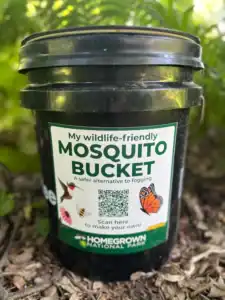
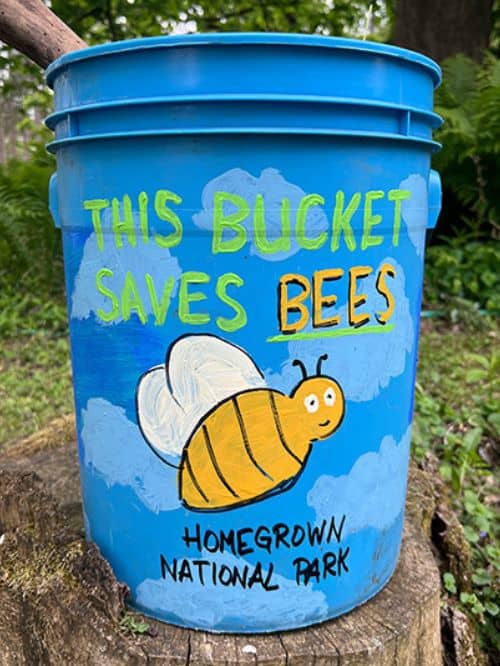
Decorate your bucket or use our ready-made sticker:
Step 2 - Add Water
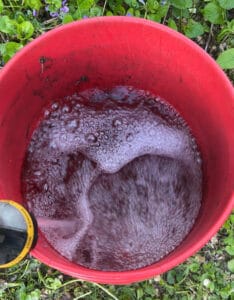
Fill the bucket about two-thirds full with water.
Step 3 - Add Organic Matter
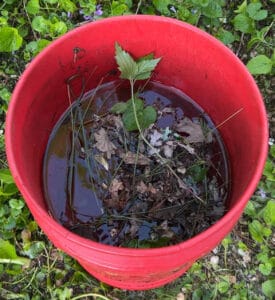
Add a small handful of dead leaves or grass clippings. As the water sits, it will begin to break down and become more attractive to mosquitoes looking for a place to lay eggs.
Step 4 - Add Your Dunk
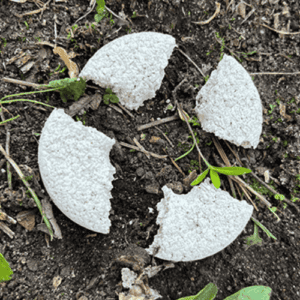
Break up your mosquito dunk and drop approximately one-quarter of the dunk into your bucket.
Step 5 - Add Cover Or Stick
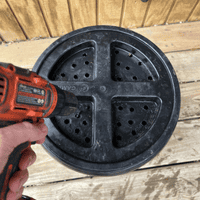


Add a lid with plenty of large holes drilled or wire secured with a rock or zip ties. Alternatively, (if you don't have pets or small kids), place a stick in the bucket so it leans out above the rim. This gives small animals an escape route if they fall in.
Step 6 - Place Your Bucket
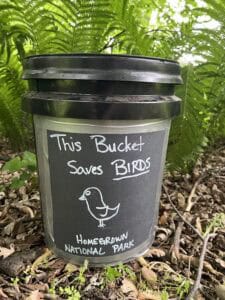
Choose a shaded, low-traffic area where mosquitoes are likely to gather. Corners of your yard or along property lines often work well. (additional tips below)
Step 7 - Show It Off
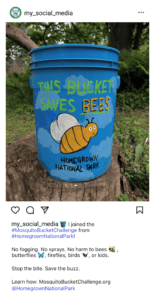
Post your bucket on social media using the hashtag #MosquitoBucketChallenge. Find graphics and tools on the Share page.
Step 1 - Decorate (Optional)
Decorate your bucket or use our ready-made sticker:
Step 2 - Add Water
Fill the bucket about two-thirds full with water.
Step 3 - Add organic material
Add a small handful of dead leaves or grass clippings.
As the water sits, it will begin to break down and become more attractive to mosquitoes looking for a place to lay eggs.
Step 4 - Add Your Dunk
Break up your mosquito dunk and drop approximately one-quarter of the dunk into your bucket.
Step 5 - Add Cover Or "Rescue Stick"
Add a lid with plenty of large holes drilled or wire secured with a rock or zip ties. Alternatively, (if you don't have pets or small kids), place a stick in the bucket so it leans out above the rim. This gives small animals an escape route if they fall in.

Step 6 - Place Your Bucket
Choose a shaded, low-traffic area where mosquitoes are likely to gather.
Corners of your yard or along property lines often work well.
(additional tips below)
Step 7 - Show It Off
Post your bucket on social media using the hashtag #MosquitoBucketChallenge
Find additional graphics and tools on the Challenge page.
How-To with "Rescue Stick"
Ways to improve results
- Start early in the mosquito season, before populations build.
- Use multiple buckets if you have a larger yard or multiple mosquito-prone areas.
- You can speed up the process by letting the water sit in the sun for a few days before placing your bucket.
- Drill a small hole at your desired water line so excess rain can drain and prevent overflow.
Where to place your bucket
- In shaded areas
- Near where mosquitoes are active
- Away from high-traffic areas
Buckets work best in quiet, shaded areas where mosquitoes are likely to gather. Corners of your yard or along property lines often work well. Try a spot that stays damp and undisturbed.
Safety and maintenance
Safety
- Use a cover, mesh, or safety stick to prevent access by children, pets, or small animals.
- Place buckets out of reach and check them regularly.
Maintenance
- Check water levels regularly.
- Replace the mosquito dunk about once a month.
- Without maintenance, buckets can become breeding sites instead of preventing them.
Additional best practices
- Dump standing water regularly—birdbaths, containers, and anything that collects rain are prime mosquito breeding spots.
- Plant native to attract birds, bats, and dragonflies, natural mosquito predators.
- Use repellents for personal protection rather than fogging your whole yard.
- These steps, paired with mosquito buckets, can reduce mosquitoes while avoiding broader harm.
TRACK YOUR IMPACT
Make Your Bucket Count
You’re reducing mosquitoes without fogging—helping protect bees, butterflies, and fireflies in your yard
Now add your bucket to the Homegrown National Park Biodiversity Map so your impact is counted alongside thousands of others.
Home
Share
As Seen On


More Steps for a Healthy Yard
Here are other ways to support the life around you.